

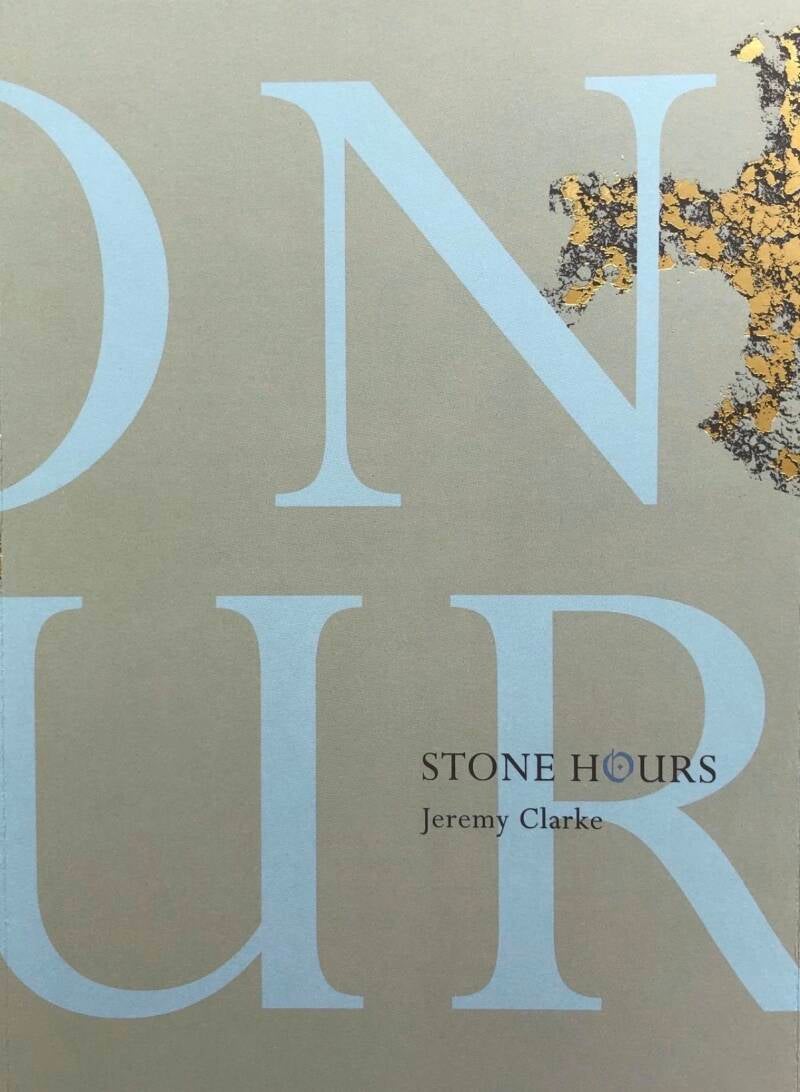
Stone Hours
JEREMY CLARKE
2024
POETRY
ISBN 978-0-9867097-6-0 (softcover)
344 pp.
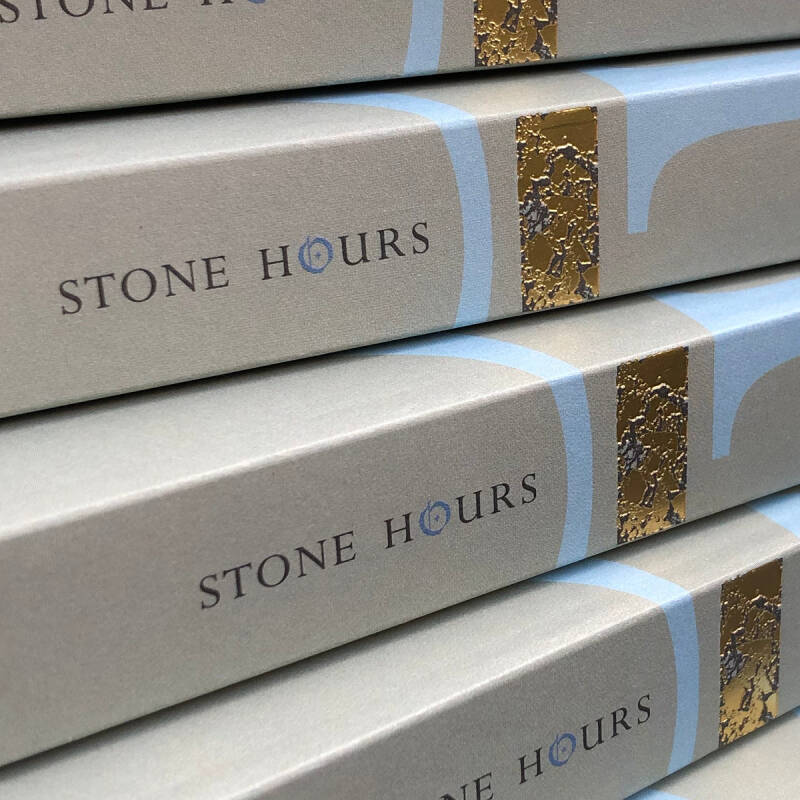
First edition of 350 numbered copies
CA$32.95
In the urbanscape where he dwells, Jeremy Clarke awakens us to breath and beauty, stillness and sound, stone and light. The culmination of twenty-five years’ dedication to a single poetic vision, the poems in Stone Hours are like a prayer you don’t notice happening. Although devised in London, the poems, like the crosses in the city's kerbstones, stand for all that is urban. They are Rome, Paris, Dublin, New York, Toronto — the "everycity" that extends beyond the local to the universal — "Where a green is / beginning will be the light having chosen / one stone world over another."


¶ A Spanish stonemason asks: when is a stone properly placed? And he answers his own question: when my impatience to once more readjust it has vanished. Jeremy Clarke writes like a Spanish stonemason. His poems are houses, bridges, towers ... Incredibly beautiful, marvellous, so accurate and unexpected, and at the same time simple. Deeply impressive. I salute it. — John Berger
¶ The poems have an urgency: they are so spare, so concentrated; pared to an essential core, their reason for being; free of redundancy, ‘filler,’ time-wasting fuzziness. They have work to do, and are doing it with evident purpose, there on the page in front of every reader. — Adam Clarke-Williams
¶ Being a thoughtful person is a very special thing it seems to me. To think, to feel and then to tell of what we felt and thought, in poetic form, is truly the work of the poet. But to speak about silence, to speak of the fullness of emptiness and the beauties, the subtleties of stillness in the presence of power, this is rare. Jeremy Clarke does this, with humility and grace, a timeless watching and working into being human on Earth, a telling of that, a revealing for the rest of us who don’t have the words. He’s blessed, really. — Emily Young
¶ When I reflect on big Biblical themes, I’m as likely to reach for a phrase or an image I remember from Stone Hours as I am from the great Book itself. — Tom Adair
¶ A work of beauty and genius. — Tamasin Day-Lewis
¶ Reading Jeremy Clarke’s poems is like watching something emerge out of the consciousness of the street. The language too feels its way along: precise, tenderly inventive. The place is littered with stray voices and brief psalms—beautiful, tiny adjustments to the progress of the book. It is, in effect, a religious process, with its prayers and psalms and hymns, a kind of liturgy for the permanent in the fleeting. — George Szirtes
¶ I can’t imagine many making such an offering with their life. A life that is a trail of depth and truth as shouldn’t be possible in this age. — Michael Broughton
¶ He comes at the core of things simply and finds the mystery in them. The poems, read accumulatively, open to the reader like a gateway ... I so admire quiet line after line of his art. —Jeremy Reed
New & Noteworthy
¶ Stone Hours was a finalist for the 2025 Nelson Ball Prize. Named in honour of Nelson Ball (1942–2019), a beloved Ontario poet known for his minimalist nature poems, the prize is awarded annually to a publication by a Canadian poet and published in Canada that displays "poetry of observation."
¶ Stone Hours was chosen as the 2024 "Book of the Year" by Michael Meredith, Head of Modern Collections at Eton College.

Jeremy Clarke lives in London.